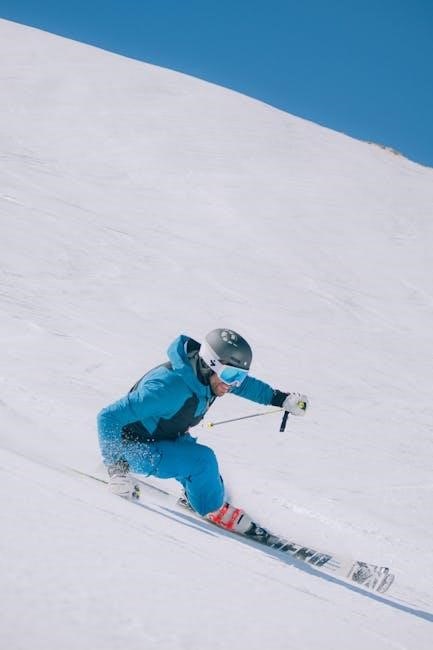
Ski Pole Length Guide: A Comprehensive Overview (Updated 01/01/2026)
Navigating the world of ski poles requires understanding optimal length for performance and balance. Gear West’s sizing chart offers a modern, reliable approach, often surpassing older guidelines.
Determining the correct ski pole length is a crucial, yet often overlooked, aspect of optimizing your skiing experience. It directly impacts your technique, efficiency, and overall enjoyment on the slopes. While seemingly simple, proper sizing goes beyond merely matching a pole to your height; it requires considering individual factors like skiing style, terrain, and even subtle anatomical differences.
Historically, height-based formulas were the standard, but modern approaches, such as those championed by Gear West, emphasize a more nuanced methodology. These contemporary charts often suggest slightly longer poles, acknowledging that adjustments can always be made – shortening is easier than lengthening! Incorrect pole length throws off balance, hindering performance. Seeking a professional fitting is highly recommended, especially if you have asymmetrical arm lengths, as customized adjustments can significantly improve your control and comfort. Experimentation with adjustable poles is also valuable for discovering your personal sweet spot.
Why Proper Ski Pole Length Matters
The significance of correctly sized ski poles extends far beyond simply aiding in propulsion. Optimal pole length is fundamental to maintaining balance and rhythm while skiing, directly influencing your technique and reducing fatigue. Incorrect length compromises your posture, forcing unnecessary strain on muscles and joints, ultimately diminishing performance and increasing the risk of injury.
A pole that’s too short hinders your ability to establish a stable rhythm and effectively transfer power during each stride. Conversely, a pole that’s too long can disrupt your balance and make it difficult to maintain control, especially on varied terrain. Even a slight mismatch can significantly impact your skiing. Experienced skiers often adjust pole length based on conditions, highlighting its dynamic importance. Prioritizing proper sizing, potentially with professional guidance, is an investment in a safer, more enjoyable, and efficient skiing experience.
The Impact of Incorrect Pole Length on Skiing
Incorrect ski pole length manifests in several detrimental ways, significantly impacting skiing performance and potentially leading to injury. Using poles that are too short results in excessive bending at the waist, forcing the skier to work harder to maintain balance and propulsion. This inefficient movement leads to quicker fatigue and reduced power transfer. Conversely, poles that are too long can throw off your center of gravity, making it difficult to maintain control, particularly during descents or on uneven terrain.
Balance is severely compromised with improper pole length, increasing the likelihood of falls. Asymmetrical arm lengths, if unaddressed, exacerbate these issues. Skiers may unconsciously compensate, leading to muscle imbalances and strain. Remember, measuring while standing rigidly isn’t ideal; mimicking a skiing stance – knees bent, leaning forward – provides a more accurate assessment. Ultimately, incorrect pole length undermines technique and enjoyment on the slopes.

Traditional Ski Pole Sizing Methods
Historically, skiers relied on formulas based on height, the inverted ‘V’ technique, and arm length measurements to determine appropriate pole length. These methods offer starting points.
The Height-Based Formula
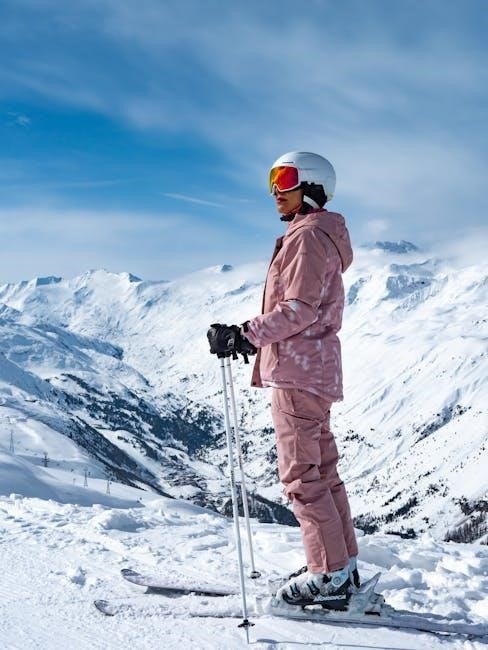
The height-based formula represents a longstanding, albeit often imprecise, method for estimating ski pole length. Traditionally, the calculation involved multiplying a skier’s height in centimeters by 0.70. This result yielded the suggested pole length in centimeters. However, contemporary experts increasingly acknowledge this formula’s limitations, often recommending slightly longer poles than it suggests.
A key issue lies in how individuals measure their height – standing straight with locked knees versus mimicking a skiing stance with flexed knees. The latter yields a shorter measurement, and therefore, a more appropriate pole length. Furthermore, the formula doesn’t account for skiing style, terrain, or individual biomechanics. It serves as a rudimentary starting point, but should be adjusted based on personal preference and experience; Many find that erring on the side of a slightly longer pole is preferable, as it can always be shortened if needed.
The Inverted ‘V’ Method
The Inverted ‘V’ method offers a practical, physical assessment of appropriate ski pole length. This technique involves standing with the ski poles planted in the snow, forming an inverted ‘V’ shape with your arms. Ideally, your elbows should be bent at approximately a 90-degree angle, or slightly more open. This position indicates a suitable pole length for maintaining balance and efficient propulsion.
However, it’s crucial to perform this assessment while mimicking a skiing stance – flexing forward at the knees and maintaining a slight bend in the elbows. Standing upright with straight legs will invariably lead to an inaccurate, and likely too-long, pole length recommendation. Remember, the goal is to replicate the posture used during skiing. This method, while more intuitive than formulas, still benefits from individual adjustments based on skiing style and terrain preferences.
The Arm Length Measurement Technique
The arm length measurement technique provides a more personalized approach to determining ski pole length. Begin by standing upright and extending one arm straight out to the side, parallel to the ground; Have someone measure the distance from the floor to your palm. Multiply this measurement by 0.7 to obtain a preliminary pole length recommendation.
However, this is merely a starting point. It’s vital to account for individual skiing technique and preferred posture. Remember to consider that measuring with straight legs yields inaccurate results; mimicking a skiing stance with bent knees is essential. Furthermore, if you have asymmetrical arm lengths, measure both arms and use the longer measurement for calculations. Don’t hesitate to adjust the length slightly based on personal comfort and experimentation on the slopes.
Modern Ski Pole Sizing Approaches
Contemporary methods prioritize personalized fit, utilizing charts like Gear West’s and considering skiing style, terrain, and whether adjustable or fixed poles are preferred.
Gear West Sizing Chart & Its Advantages
The Gear West sizing chart represents a significant advancement in ski pole fitting, often recommending lengths that are more appropriate than traditional formulas. Many older charts tend to suggest poles that are too short, potentially compromising balance and technique. Gear West’s approach emphasizes a slightly longer pole as a safer starting point, allowing skiers to shorten them if needed, rather than facing the limitation of a pole that’s too short to begin with.
This chart’s advantage lies in its alignment with current sizing guidelines, acknowledging the dynamic nature of skiing and the importance of proper biomechanics. It considers that most individuals don’t measure poles correctly – often standing upright with straight legs and regular shoes – instead of simulating a skiing stance with flexed knees. The chart encourages accounting for this by bending knees during measurement or slightly opening elbows past 90 degrees when standing straight.
Ultimately, utilizing the Gear West chart provides a more reliable foundation for selecting ski poles, promoting better control, efficiency, and overall enjoyment on the slopes.
Considering Skiing Style & Terrain
Skiing style profoundly impacts optimal pole length; a versatile skier may require multiple pole lengths for different disciplines. Classic cross-country skiing often benefits from slightly longer poles, providing a stronger push-off and aiding in efficient gliding. Conversely, skate skiing typically demands shorter poles for quicker arm movements and maintaining balance during the skating motion.
Terrain also plays a crucial role. Steeper slopes and challenging conditions often necessitate shorter poles for improved maneuverability and control. Flatter terrain or groomed trails may allow for slightly longer poles, enhancing propulsion and rhythm. An experienced skier, like one who has experimented with poles ranging from 48 to 52 cm, understands this nuance.
Adjustable poles offer a valuable solution, allowing skiers to fine-tune length based on the day’s conditions and chosen technique. While fixed-length poles provide stability, the adaptability of adjustable poles shouldn’t be underestimated, especially for those exploring various skiing styles.
Adjustable vs. Fixed Length Poles: Pros & Cons
Adjustable ski poles offer remarkable versatility, catering to varied terrain and skiing styles. Their primary advantage lies in adaptability – skiers can modify length on the fly, optimizing for different conditions, much like experimenting between 50-52cm poles. However, this adjustability comes with trade-offs. Adjustable poles can sometimes feel less rigid and secure than fixed-length options, potentially impacting power transfer.
Fixed-length poles, conversely, prioritize stability and strength. Constructed as a single unit, they deliver a more direct connection between the skier and the snow, enhancing control and responsiveness. This is particularly beneficial for skiers who consistently employ a specific technique or frequent challenging terrain.
The choice hinges on individual needs. Beginners or those exploring multiple disciplines may favor adjustable poles, while experienced skiers focused on performance might prefer the unwavering reliability of fixed-length poles.

Detailed Sizing Based on Skier Height
Precise pole length varies with height, but remember to factor in technique and terrain. Charts provide a starting point for optimal balance and efficient skiing.
Ski Pole Length for Skiers Under 5’0″
For skiers under 5’0″, determining the correct pole length is crucial for maintaining control and proper form. Traditional height-based formulas often underestimate appropriate length for this stature, potentially leading to balance issues and inefficient technique. A good starting point is to consider a pole length that, when held inverted with the tip on the floor, allows for an elbow angle slightly greater than 90 degrees.
However, individual variations in arm length and skiing style necessitate adjustments. Shorter poles promote quicker poling cadence, beneficial for dynamic skiing, while slightly longer poles offer increased stability, particularly on varied terrain. Experimentation is key; adjustable poles are invaluable for finding the sweet spot. Remember, the goal is to achieve a comfortable and powerful pole plant without overreaching or straining. Prioritizing a professional fitting is highly recommended to ensure optimal pole selection for this height range.
Ski Pole Length for Skiers 5’0″ ⏤ 5’6″
Skiers falling within the 5’0″ to 5’6″ height range often find themselves navigating a transition zone in pole sizing. While height-based charts provide a baseline, individual factors significantly influence the ideal length. Gear West’s sizing chart proves particularly useful here, often recommending a slightly longer pole than older methods. When standing with legs slightly bent and mimicking a skiing posture, the elbow angle should ideally be around 90 degrees when holding the pole inverted, tip on the ground.
Consider your skiing style; more aggressive skiers may prefer a slightly shorter pole for quicker movements, while those prioritizing stability might opt for a longer length. Adjustable poles are beneficial for experimentation. Remember, proper measurement requires flexing at the knees, unlike standing rigidly. Don’t hesitate to seek a professional fitting to refine your choice and address any asymmetrical arm lengths.

Ski Pole Length for Skiers 5’6″ ‒ 6’0″
For skiers between 5’6″ and 6’0″, finding the correct pole length becomes a balance between general guidelines and personal preference. This height range often benefits from a more nuanced approach than simple height-based formulas. Utilizing resources like the Gear West sizing chart is highly recommended, as it tends to be more accurate than older recommendations. The inverted ‘V’ method, performed with a slight bend in the knees to simulate a skiing stance, is crucial for accurate measurement.
Experimentation with adjustable poles can be incredibly valuable. A slightly longer pole is generally safer, allowing for adjustments downwards if needed. Remember that balance is key; incorrect pole length significantly impacts stability. If arm lengths differ, consider adjusting pole lengths accordingly, marking them clearly to avoid confusion. Professional fitting is always a worthwhile investment.
Ski Pole Length for Skiers Over 6’0″
Skiers exceeding 6’0″ typically require longer poles to maintain proper technique and balance. While height-based formulas offer a starting point, relying on modern sizing charts, such as those provided by Gear West, is advisable. These charts often account for the leverage differences inherent in taller skiers. The arm length measurement technique, combined with a forward flex at the knees – mimicking a skiing position – provides a more precise assessment than simply standing upright.
Adjustable poles are particularly beneficial for this height range, allowing for fine-tuning based on terrain and skiing style. A slightly longer pole is preferable initially, enabling adjustments downwards. Remember, a proper fit is paramount; imbalances caused by incorrect length can severely compromise performance. Seeking professional fitting ensures optimal pole length for individual needs.
Advanced Considerations for Optimal Fit
Individual factors like skiing technique, asymmetrical arm lengths, and proper knee flexion during measurement significantly impact pole fit and performance on the slopes.
Accounting for Skiing Technique (Classic vs. Skate)
The ideal ski pole length varies considerably depending on whether you primarily practice classic or skate skiing techniques. Classic skiing, emphasizing a traditional kick-and-glide motion, generally benefits from poles that reach closer to your underarm – typically around 20-25cm shorter than your height. This length facilitates a powerful pole plant and efficient forward propulsion.
Conversely, skate skiing, characterized by a V-shaped stride, demands longer poles. These poles should reach approximately to your chin or even slightly higher, often 25-30cm shorter than your height. The increased length provides greater leverage for each stride, crucial for generating speed and maintaining balance during the dynamic skating motion.
Experienced skiers often utilize adjustable poles to adapt to varying terrain and techniques, allowing for fine-tuning based on conditions. Experimentation is key to discovering the optimal length for your individual style and preferences.
Addressing Asymmetrical Arm Lengths
It’s surprisingly common for individuals to have slightly different arm lengths, a factor often overlooked during ski pole sizing. Ignoring this asymmetry can lead to imbalances in technique, increased fatigue, and even potential injury. If you suspect a discrepancy, a professional pole fitting is highly recommended to accurately measure each arm.
When asymmetry exists, don’t hesitate to adjust pole lengths accordingly. Typically, shortening the pole for the shorter arm by 1-2 centimeters can restore balance and improve skiing efficiency. Clearly mark the poles to differentiate them, preventing confusion during use.
This adjustment ensures a symmetrical pole plant, allowing for equal power transfer and a more natural skiing motion. Ignoring this detail can subtly compromise your form and enjoyment on the slopes, so addressing it is a worthwhile investment in your skiing experience.
The Importance of Flexing at the Knees During Measurement
Accurate ski pole sizing hinges on replicating your natural skiing posture during the measurement process. Standing upright with straight legs provides an inaccurate reading, leading to poles that are often too long. The key is to mimic the athletic stance you adopt while skiing – a slight bend in the knees and a forward flex at the hips.
This flexed position lowers your overall height, resulting in a shorter recommended pole length. Many individuals measure with legs straight, adding unnecessary length. Alternatively, maintain an upright stance but allow your elbows to open slightly past a 90-degree angle, simulating the skiing position.
Prioritizing this dynamic measurement ensures the poles complement your skiing technique, enhancing balance and power transfer on the slopes. A professional fitting will always incorporate this crucial element for optimal results.

Fine-Tuning Your Pole Length
Experimentation is key to finding your ideal pole length; adjustable poles facilitate this process, allowing for incremental changes to optimize balance and performance on varied terrain.
Experimenting with Pole Length Adjustments
Adjustable poles are invaluable tools for refining your ski experience. Begin by making small adjustments – a centimeter or two at a time – to observe the impact on your technique and overall feel. Remember that measuring while standing rigidly isn’t ideal; simulate a skiing stance by flexing your knees and leaning forward.
This mimics the natural body position during skiing, providing a more accurate length assessment. Pay attention to how changes affect your rhythm, power transfer, and stability. A slightly longer pole can be safely shortened, but adding length to a pole that’s too short isn’t possible.
Don’t hesitate to test different lengths across various snow conditions and terrain types. What feels optimal on groomed trails might differ significantly in powder or challenging backcountry situations. Keep a record of your adjustments and corresponding sensations to identify your sweet spot.
When to Shorten Your Poles

Consider shortening your ski poles if you experience excessive strain in your shoulders or find yourself overreaching during your skiing motion. A common indicator is if your elbows don’t maintain a comfortable 90-degree bend when planting your poles. Shorter poles can enhance maneuverability, particularly in tight spaces or when navigating technical terrain.
If you’re primarily skiing on flat or gently rolling terrain, a slightly shorter pole length can improve efficiency and reduce fatigue. Experimenting with shorter lengths can also be beneficial if you’re transitioning to a more dynamic skiing style, emphasizing quicker pole plants and a more compact technique.
Remember, a gradual reduction is key; avoid drastic changes. Pay attention to how the adjustment impacts your balance and power transfer. A shorter pole might feel more responsive, but ensure it doesn’t compromise your stability or reach.
When to Lengthen Your Poles
Lengthening your ski poles can be advantageous when tackling steeper slopes or skiing in deeper snow conditions. Increased pole length provides greater leverage for uphill climbs and helps maintain stability when descending challenging terrain. If you find yourself consistently feeling cramped or lacking reach, extending your poles might be the solution.
For skiers employing a more gliding-focused technique, such as classic skiing, longer poles can facilitate a more powerful and efficient stride. A longer pole allows for a fuller extension and a stronger push-off. However, be mindful of maintaining control; excessively long poles can hinder maneuverability.
Remember to adjust gradually and assess the impact on your technique. A slightly longer pole should enhance your power and stability without compromising your balance or causing undue strain.
Practical Tips & Recommendations
Seeking a professional fitting is highly recommended, especially if you have asymmetrical arm lengths; Consider pole material and weight for optimal performance and comfort.
Seeking Professional Pole Fitting
A professional pole fitting is invaluable for skiers of all levels, but particularly beneficial for those new to the sport or experiencing balance issues. Experienced fitters assess your skiing technique, height, and body proportions to determine the ideal pole length. They can also identify and accommodate asymmetrical arm lengths, a common issue often overlooked with self-measurement.
During a fitting, expect the professional to observe your stance and movement, simulating skiing motions. They’ll likely have you bend your knees and flex at the waist, mimicking the skiing position, as opposed to standing rigidly upright. This dynamic assessment provides a more accurate measurement than static methods. Don’t hesitate to discuss your skiing style and the terrain you typically encounter – a fitter can tailor recommendations accordingly.
Remember, a slight length adjustment can significantly impact your balance and control. A professional fitting minimizes guesswork and ensures you’re equipped with poles that enhance, rather than hinder, your skiing experience. It’s an investment in safety and performance.
Understanding Pole Material & Weight
Ski pole materials significantly influence performance, durability, and weight. Traditionally, aluminum poles were standard, offering affordability and robustness. However, modern skiers often prefer carbon fiber poles for their superior stiffness-to-weight ratio, reducing fatigue during long days on the slopes. Carbon fiber transmits power more efficiently, enhancing poling technique.
The weight of your poles impacts your overall skiing experience. Lighter poles require less energy to swing, improving rhythm and reducing strain. However, extremely lightweight poles may sacrifice durability. A balance between weight and strength is crucial. Consider your skiing style; aggressive skiers may prioritize durability, while those focused on endurance might favor lighter options;
Pole grips also vary in material, commonly cork, rubber, or foam. Cork provides excellent grip and molds to your hand over time, while rubber offers durability and all-weather performance. Ultimately, selecting the right material and weight depends on your individual needs and preferences.
Resources for Further Research
Expanding your knowledge beyond this guide is highly recommended for optimal pole fitting. Gear West’s pole sizing chart (https://gearwest.com/cross-country-pole-sizing/) provides a contemporary and detailed approach, often considered more accurate than older methods. It’s a valuable starting point for understanding current sizing recommendations.
Professional ski shops offer personalized pole fitting services. Experienced technicians can assess your technique, height, and skiing style to determine the ideal pole length. Don’t hesitate to seek their expertise, especially if you have asymmetrical arm lengths or unique needs.
PSIA (Professional Ski Instructors of America) resources offer insights into proper skiing technique, which directly impacts pole usage. Online forums and communities dedicated to cross-country skiing can provide valuable peer-to-peer advice and shared experiences. Remember to critically evaluate information and prioritize professional guidance when available.
Leave a Reply